


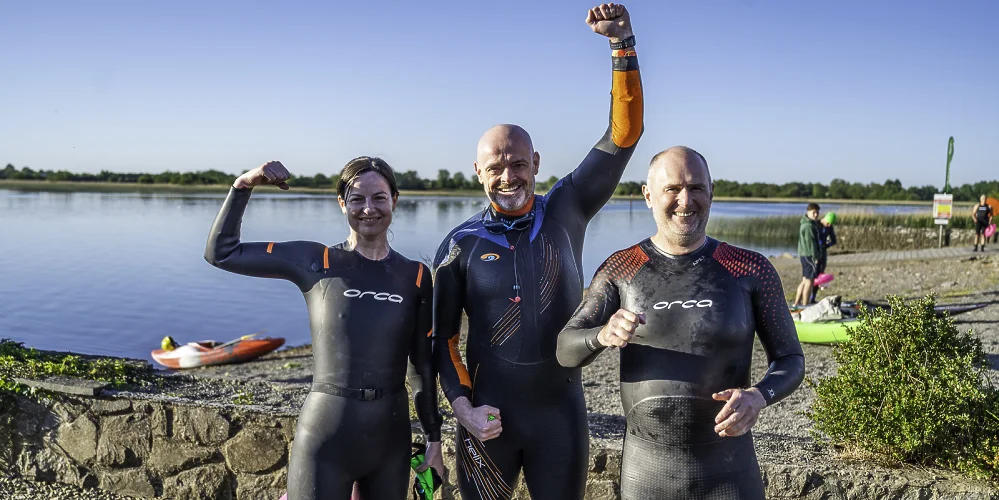
Spring is when many swimmers start returning to the sea and lakes after the colder winter months. If you're preparing for Gaelforce Great Swim Trilogy, this is the perfect time to begin rebuilding your comfort and confidence in open water.
One of the biggest challenges during spring swimming is dealing with changing temperatures. While the air can feel mild or even warm, the water often remains cold for much longer. Understanding how to gradually adapt to these conditions will help you train more safely and enjoy your swims.
1. Remember: the water is still cold
Even on sunny spring days, water temperatures in Ireland can still be close to winter levels. The contrast between warmer air and cold water can feel surprising when you first get in.
For early season swims, it's important to dress for the water temperature rather than the weather. A well-fitting wetsuit is essential for longer swims, and many swimmers also use thermal caps, gloves or neoprene socks to stay comfortable.
2. Start with shorter swims
If you haven’t been swimming regularly outdoors over winter, give your body time to readjust.
Begin with shorter sessions and gradually build up your swim time over a number of weeks. Even 5–10 minutes in cold water can be beneficial early in the season. Consistent swims will help your body adapt faster than occasional longer sessions.
This gradual approach is especially important if you're building towards the distances included in Gaelforce Great Swim Trilogy events.
3. Take time to acclimatise
The first minute in cold water can trigger an automatic gasp reflex. To avoid this, enter the water slowly and take a moment to allow your breathing to settle.
Before you start swimming:
- Pause in shallow water
- Focus on slow, steady breathing
- Allow your body to adjust to the temperature
Once your breathing feels controlled, begin swimming at an easy pace.
4. Plan your swim and your recovery
Spring conditions can change quickly, so it’s always worth checking the weather and water conditions before heading out. Swimming with others or in organised groups is also recommended.
After your swim, warming up properly is just as important as the swim itself. Dry off quickly, put on warm layers and enjoy a warm drink while your body temperature returns to normal.
5. Building towards swim season
Spring training is about gradual adaptation and consistency. Short, regular swims will help rebuild your cold water tolerance and endurance over time.
With the right preparation, you’ll be ready to take on each stage of Gaelforce Great Swim Trilogy and enjoy the open water swimming season ahead.
Back
