


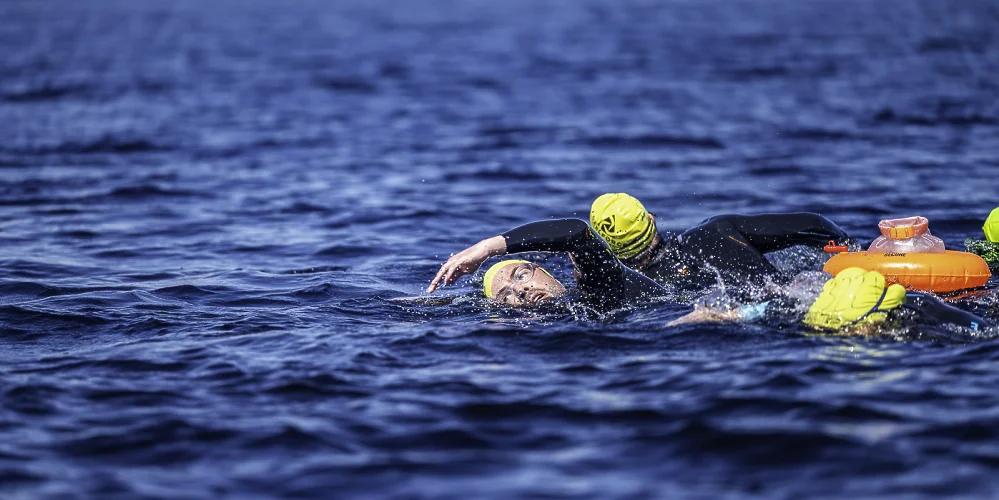
If you’ve signed up for Gaelforce Great Swim Trilogy or are thinking about diving in, you probably know that open-water swimming is a physical challenge. But beyond the physical, there’s growing evidence that swimming in colder water can have surprising effects on your mental health, including stress levels, mood, and sleep patterns.
1. Why cold water isn’t just a physical challenge
Taking on cold water isn’t just about grit and endurance, it’s also a mental exercise. When your body hits low-temperature water, it triggers a strong physiological response: norepinephrine and other neurotransmitters spike, your nervous system lights up, and your brain goes into alert mode. While this initially feels intense, even stressful in the moment, the adaptation can deliver benefits that extend beyond your swim.
2. Stress: shock now, calm later
One of the most consistent findings in research into cold-water immersion (including cold showers, plunges, and swims) is its effect on stress hormones:
- Short-term stress response: Cold exposure stimulates the sympathetic nervous system, your “fight-or-flight” mode, releasing noradrenaline and other chemicals that heighten alertness and challenge your body. This is why that first plunge feels so intense.
- After the dip: Within hours, many people report feeling calmer, less stressed, and mentally clearer. In a systematic review of cold-water immersion studies, participants showed reduced stress levels up to 12 hours after exposure.
- Long-term resilience: Voluntary, regular exposure to cold teaches your body and mind how to handle discomfort, a form of resilience training that can translate off the water and into everyday life.
So that chill you feel during a Gaelforce swim might be a small price to pay for a stress response that ultimately settles into greater mental control.
3. Mood: real chemicals, real effects
Cold water isn’t just a shock, it also changes what’s happening in your brain:
- Cold exposure increases levels of dopamine and endorphins, chemicals tied to motivation, pleasure, and mood regulation. These changes can help you feel more positive and focused after a swim.
- Studies show short-term increases in positive emotions like alertness, pride, and inspiration after immersion.
- Cold-water swimmers often report a post-swim “high”, an uplift in mood that many describe as exhilarating and refreshing, not just physically but mentally.
This may be especially relevant during training and tapering phases for your Trilogy events when stress and fatigue can pile up.
4. Sleep: cooler body, better rest
Sleep is essential for recovery, and surprising evidence points to cold water’s potential to help here, too:
- Immersion in cool water can help lower your core body temperature, which signals your brain that it’s time to rest.
- Some research has linked regular cold water immersion with improved sleep quality and fewer sleep disturbances over time.
While the effects vary between individuals and depend on how cold and how often you plunge, the trend suggests that cold water exposure before bed or as part of a consistent routine may support deeper, more restful sleep, that’s great news for anyone juggling training and daily life.
5. Putting it into practice: cold water and open-water swims
Training for Gaelforce Great Swim Trilogy means you’ll already be in and around cool Irish waters. Think of it this way:
- Stress training: Rather than something to avoid, cold swims can be an ally, helping you adapt not just physically, but mentally.
- Mind-body connection: Use mindful breathing during chilly dips to reduce immediate discomfort and enhance mood afterward.
- Recovery tool: After a long training session, a short cold plunge or cool swim might be your reset button before the next big swim.
Ready to join the journey?
Whether you’re already registered or still thinking about it, winter is where the story really begins.
If you’re looking for a challenge that offers more than a medal, Gaelforce Great Swim Trilogy is waiting.
Back
