


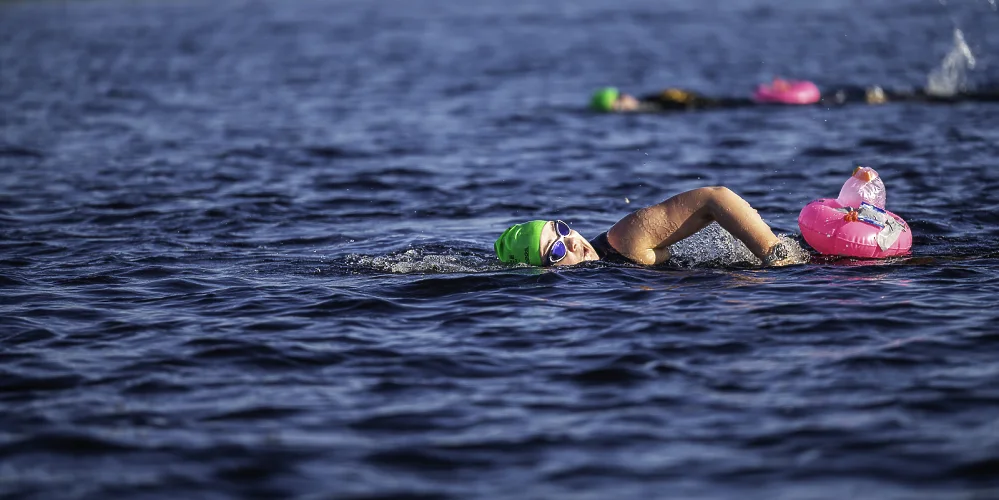
Training smarter for Gaelforce Great Swim Trilogy
If you’re already registered for Gaelforce Great Swim Trilogy, or considering taking on the challenge, chances are you’re spending more time in the water, or planning to. Preparing for open-water swim events naturally raises the question: should I simply stay in longer to get better?
While increased water time plays an important role in building endurance and confidence, especially for long-distance open-water swims, longer is not always better. The key to successful preparation for Gaelforce Great Swim Trilogy lies in training smart, not just training longer.
Why longer open-water sessions feel like the right answer?
Open-water swimming demands more than pool fitness. Conditions, temperature, sighting, and sustained effort all require adaptation. Spending more time in open water helps athletes become comfortable with these variables and builds mental resilience, both essential for race day.
However, longer sessions only deliver benefits when your technique, focus, and energy levels are maintained. Once fatigue begins to compromise form or awareness, the value of staying in the water drops significantly.
Fatigue in open water: what swimmers often miss
One of the challenges of open-water training is that fatigue isn’t always obvious. The water supports the body, and cooler temperatures can dull the sensation of tiredness. This can lead swimmers to push well beyond their effective training limit.
As fatigue increases, stroke efficiency decreases, breathing becomes less controlled, and navigation can suffer. In open water, where conditions can change quickly, reduced awareness increases risk. For the Swim Trilogy competitors, recognising this balance is crucial, not just for performance, but for safety.
Managing cold and energy levels
Events like the Swim Trilogy take place in natural water environments, where temperature and weather play a major role. Extended exposure can slowly lower core body temperature, even in conditions that feel manageable at first. Early signs of cold stress are subtle but impactful, affecting coordination and decision-making.
Mental focus: a key element of open-water success
Longer open-water sessions place increasing demands on mental focus. Maintaining awareness of surroundings, conditions, and personal limits is essential, particularly when swimming in unfamiliar locations. As concentration fades, swimmers are more likely to miss signs that it’s time to stop or adjust.
From a performance perspective, training while mentally fatigued can reinforce poor habits. For those preparing for the Swim Trilogy, consistent, high-quality sessions are far more valuable than simply accumulating hours in the water.
How to safely increase your time in the water
If you’re preparing for one of the Gaelforce Great Swim events, increasing your water time should be done progressively and with purpose.
Key principles to follow include:
- Gradually building session length to allow your body and mind to adapt
- Prioritising technique, awareness, and safe exits over total swim time
Longer sessions should support specific goals such as endurance development, race pacing, or adapting to open-water conditions. Pairing these sessions with proper recovery, nutrition, and hydration will ensure your training translates positively on race day.
Is longer really better for Gaelforce Great Swim Trilogy?
When preparing for Gaelforce Great Swim Trilogy, success isn’t about staying in the water as long as possible. It’s about arriving on the start line confident, capable, and well-prepared. Quality training, progressive exposure, and respect for the environment will do far more for your performance than pushing beyond sensible limits.
With the right approach, longer sessions can play an important role in your preparation, but only when they serve a clear purpose. Train smart, listen to your body, and make every swim count.
Back
